

We Tested lambda Managed Instances - Here’s What We Found
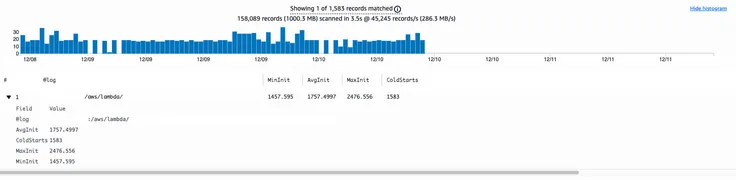
AWS just released lambda Managed Instances at re:Invent, and we put it to the test with our AppSync GraphQL API. The results?
Cold starts went from 2 seconds to 0.
Zero.
Not “almost zero.”
Actual zero.
The Setup:
Here’s what it takes to get there.
Our current setup uses standard lambda with AppSync. Cold starts were a pain point, especially for our user-facing GraphQL API.
We were running them on Python 3.12 with 256MB memory, which is cost-effective.
The Changes and Requirements:
- Python 3.14 is required (latest version only). This caused some initial hiccups with dependencies as we did an impromptu upgrade.
- Minimum 2GB memory (we were running the AppSync lambda resolvers on 256MB)
- Minimum 3 EC2 instances running 24/7.
- New functions only, there is no out of the box migration path for existing lambdas.
The Migration:
Since you can’t directly convert existing lambda functions to use EC2 Managed Instances, the migration requires a side-by-side deployment process with an AppSync switchover:
-
Create the Capacity Provider: Set up the necessary infrastructure by creating a capacity provider for the EC2 instances that will host your lambda functions.
-
Deploy a new instance of the lambda: Deploy a new version of your lambda function specifically configured to use the EC2 Managed Instances. Ensure all dependencies are compatible with Python 3.14 and test thoroughly in a staging environment.
-
Switchover at the AppSync resolver: Update your AppSync resolvers to point to the new lambda function. This switchover can be done gradually or all at once, depending on your risk tolerance and testing confidence. Monitor performance closely during the transition.
My Take After Testing:
- Use lambda Managed Instances when you have:
- Predictable, consistent traffic patterns
- Latency sensitive user-facing APIs
- Business impact from cold starts
- Budget for always-on infrastructure
- Stick with standard lambda when you have:
- Unpredictable or sporadic traffic
- Background/async processing
- Cost optimization as priority
- No critical latency requirements
While lambda Managed Instances eliminate cold starts entirely, they come with a fixed cost for running EC2 instances 24/7.
For workloads with predictable, consistent traffic patterns, this can be more cost-effective than the variable costs associated with cold starts in standard lambda, with the additional benefit of consistent performance.
However, for sporadic or unpredictable traffic, standard lambda’s pay as you go model remains superior.
Always calculate the total cost of ownership, factoring in both infrastructure costs, potential business impact from latency, and opportunity costs of a major refactor when deciding between standard lambda, lambda Managed Instances and refactor into containers in ECS/EKS.
The Real Question:
Is your workload predictable and latency sensitive? Then lambda Managed Instances is another tool in your arsenal that can keep you in business without the need for a refactor into other latency sensitive solutions, like containers in ECS/EKS. For everything else, standard lambda’s PAYG still wins.
For our GraphQL API, eliminating that 2 second cold start was worth every trade off. But this isn’t a one size fits all upgrade, it’s a specialized tool for specialized problems.